
Avalue · Calcolo ad alte prestazioni
HPM-ERSUA
*Prezzo su richiesta. Ci contatti per un preventivo.
In evidenza
- Scheda server ATX a singolo socket per Intel® Xeon® Scalable di 4ª/5ª generazione con IPMI 2.0
- Socket Intel LGA4677 (TDP max. 270W), chipset Intel® C741
- 6 x RDIMM DDR5 5600MHz fino a 1.5TB
- TPM 2.0 onboard; IPMI 2.0 con controller BMC AST2600
- Intel I210AT 1GbE + I226-LM 2.5GbE + X550AT2 (2 x 10GbE)
- 4 slot PCIe Gen5 x16 + 3 slot PCIe Gen5 x4
- 1 x M.2 M-Key PCIe 3.0 x4 NVMe (2242/2260/2280/22110)
- 5 x SATA III (SATA da 1 a 4 RAID 0/1/5/10)
- 12" x 9.6" (304.8 x 243.84 mm); Windows 10 IoT / Server IoT / Ubuntu / RHEL
Descrizione del prodotto
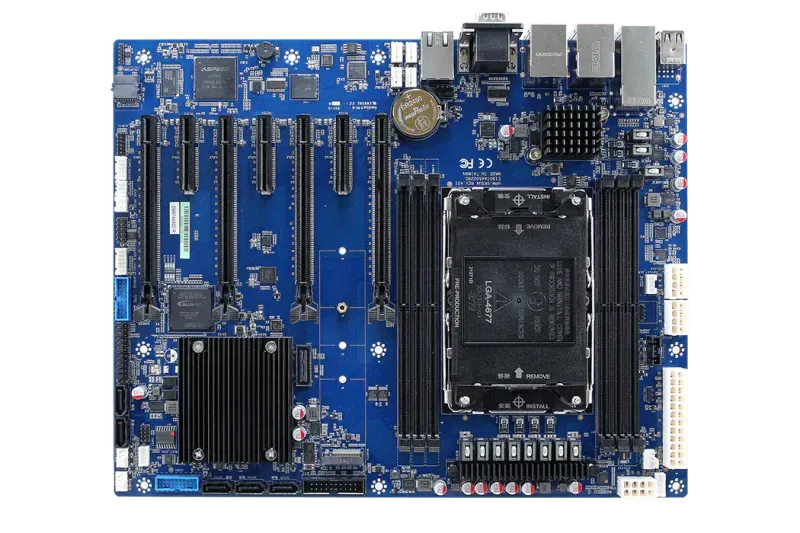
L'Avalue HPM-ERSUA è una scheda server ATX a singolo socket, costruita sul socket Intel LGA4677 per processori Intel® Xeon® Scalable di 4ª/5ª generazione (TDP massimo fino a 270W) con chipset Intel® C741, progettata come piattaforma di elaborazione gestibile e ricca di espansioni per server edge e nodi HPC.
Con 6 slot DDR5 5600MHz RDIMM fino a 1,5TB, TPM 2.0 integrato e IPMI 2.0 tramite BMC ASPEED AST2600, offre prestazioni x86 di classe data center in una scheda da 12" x 9,6".
Offre 4 slot PCIe Gen5 x16 e 3 slot PCIe Gen5 x4, uno slot M.2 M-Key PCIe 3.0 x4 NVMe, 5 porte SATA III (RAID 0/1/5/10), tripla Ethernet Intel (I210AT 1GbE, I226-LM 2.5GbE, X550AT2 doppia 10GbE) e USB 3.2 Gen1/USB 2.0, con supporto per Windows 10 IoT / Windows Server IoT 2019/2022, Ubuntu o RHEL.
Specifiche tecniche
Che cos'è HPM-ERSUA?
The HPM-ERSUA is a calcolo ad alte prestazioni manufactured by Avalue, designed specifically for server-board applications. It features processore of Intel LGA4677 Socket supports 4th/5th Generation Intel® Xeon® Scalable Processor (Max. TDP at 270W), rete of 1 x Intel I210AT 1GbE controller, 1 x Intel I226-LM 2.5GbE controller, 1 x Intel X550AT2 10GbE controller s… and sistema operativo of AMI UEFI BIOS. L'Avalue HPM-ERSUA è una scheda server ATX a singolo socket, costruita sul socket Intel LGA4677 per processori Intel® Xeon® Scalable di 4ª/5ª generazione (TDP massimo fino a 270W) con chipset Intel® C741, progettata come piattaforma di elaborazione gestibile e ricca di espansioni per server edge e nodi HPC. Con 6 slot DDR5 5600MHz RDIMM fino a 1,5TB, TPM 2.0 integrato e IPMI 2.0 tramite BMC ASPEED AST2600, offre prestazioni x86 di classe data center in una scheda da 12" x 9,6". Offre 4 slot PCIe Gen5 x16 e 3 slot PCIe Gen5 x4, uno slot M.2 M-Key PCIe 3.0 x4 NVMe, 5 porte SATA III (RAID 0/1/5/10), tripla Ethernet Intel (I210AT 1GbE, I226-LM 2.5GbE, X550AT2 doppia 10GbE) e USB 3.2 Gen1/USB 2.0, con supporto per Windows 10 IoT / Windows Server IoT 2019/2022, Ubuntu o RHEL.
Caratteristiche e vantaggi principali
- Scheda server ATX a singolo socket per Intel® Xeon® Scalable di 4ª/5ª generazione con IPMI 2.0
- Socket Intel LGA4677 (TDP max. 270W), chipset Intel® C741
- 6 x RDIMM DDR5 5600MHz fino a 1.5TB
- TPM 2.0 onboard; IPMI 2.0 con controller BMC AST2600
- Intel I210AT 1GbE + I226-LM 2.5GbE + X550AT2 (2 x 10GbE)
- 4 slot PCIe Gen5 x16 + 3 slot PCIe Gen5 x4
- 1 x M.2 M-Key PCIe 3.0 x4 NVMe (2242/2260/2280/22110)
- 5 x SATA III (SATA da 1 a 4 RAID 0/1/5/10)
- 12" x 9.6" (304.8 x 243.84 mm); Windows 10 IoT / Server IoT / Ubuntu / RHEL
Applicazioni e casi d'uso
HPM-ERSUA è ideale per diverse applicazioni di automazione industriale:
- High-performance computing and data processing tasks
- Memory-intensive applications and multitasking
- Internet of Things (IoT) and edge computing
- Industrial computing and data processing
- Edge computing and IoT applications
- Real-time monitoring and control
- Industrial automation systems