
Avalue · Calcul haute performance
HPM-SRSUA
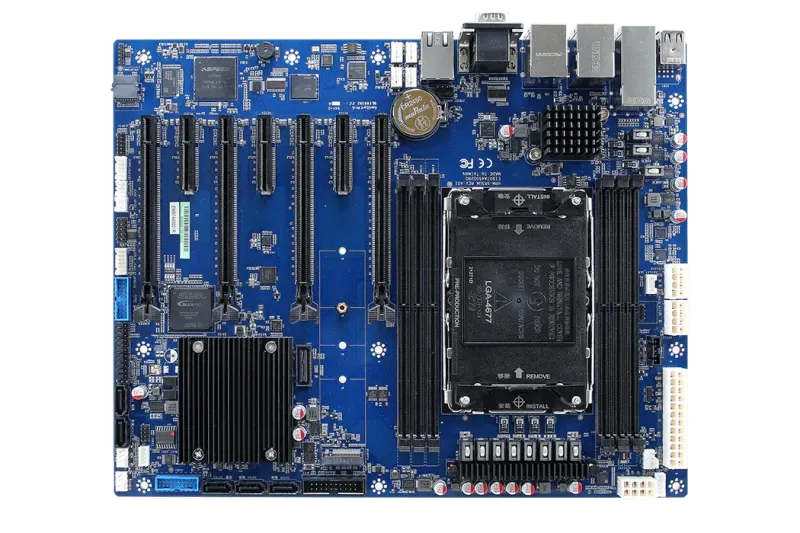
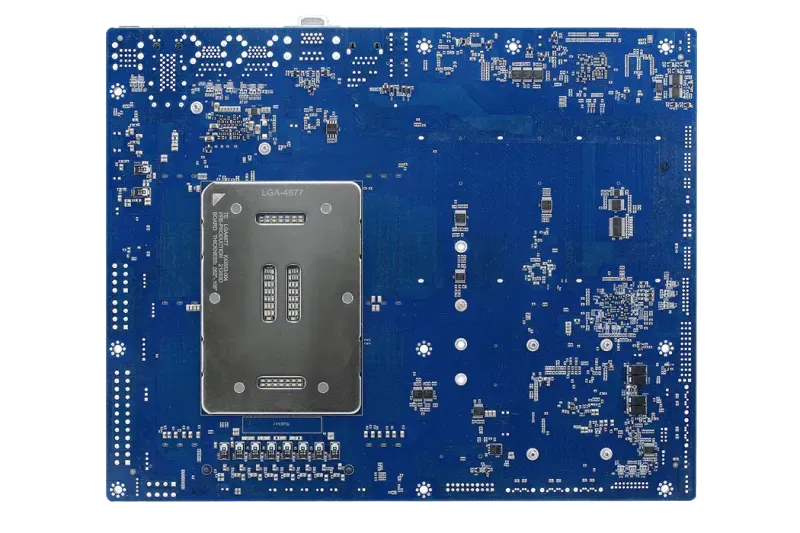
*Prix sur demande. Contactez-nous pour un devis.
Points forts
- Carte serveur ATX mono-socket Intel® Xeon® Scalable de 4e génération avec IPMI 2.0
- Socket Intel LGA4677 (TDP max. 270W), chipset Intel® C741
- 6 x RDIMM DDR5 4800/4400 MHz jusqu'à 1,5 To
- TPM 2.0 intégré ; IPMI 2.0 avec contrôleur BMC AST2600
- Intel I210AT 1GbE + I226-LM 2.5GbE + X550AT2 (2 x 10GbE)
- 4 x emplacements PCIe Gen5 x16 + 3 x PCIe Gen5 x4
- 1 x M.2 M-Key PCIe 3.0 x4 NVMe (2242/2260/2280/22110)
- 5 x SATA III (SATA 1~4 RAID 0/1/5/10)
- 12" x 9.6" (304.8 x 243.84 mm) ; Windows 10 IoT / Server IoT / Ubuntu / RHEL
Description du produit
L'Avalue HPM-SRSUA est une carte serveur ATX mono-socket construite sur le socket Intel LGA4677 pour processeurs Intel® Xeon® Scalable de 4e génération (TDP max.
jusqu'à 270W) avec le chipset Intel® C741, conçue comme une plateforme de calcul gérable et riche en options d'extension pour serveurs edge et nœuds HPC.
Avec 6 x DDR5 4800/4400MHz RDIMM jusqu'à 1,5 To, un TPM 2.0 intégré et l'IPMI 2.0 via un BMC ASPEED AST2600, elle offre des performances x86 de classe centre de données sur une carte de 12" x 9,6".
Elle offre 4 emplacements PCIe Gen5 x16 et 3 emplacements PCIe Gen5 x4, un NVMe M.2 M-Key PCIe 3.0 x4, 5 x SATA III (RAID 0/1/5/10), un triple Ethernet Intel (I210AT 1GbE, I226-LM 2,5GbE, X550AT2 double 10GbE), et USB 3.2 Gen1/USB 2.0, fonctionnant sous Windows 10 IoT / Windows Server IoT 2019/2022, Ubuntu ou RHEL.
Caractéristiques techniques
Qu'est-ce que le HPM-SRSUA ?
The HPM-SRSUA is a calcul haute performance manufactured by Avalue, designed specifically for server-board applications. It features réseau of CPU temperature, fan speed and voltage monitoring, fan speed control, case open detection and os of AMI UEFI BIOS. L'Avalue HPM-SRSUA est une carte serveur ATX mono-socket construite sur le socket Intel LGA4677 pour processeurs Intel® Xeon® Scalable de 4e génération (TDP max. jusqu'à 270W) avec le chipset Intel® C741, conçue comme une plateforme de calcul gérable et riche en options d'extension pour serveurs edge et nœuds HPC. Avec 6 x DDR5 4800/4400MHz RDIMM jusqu'à 1,5 To, un TPM 2.0 intégré et l'IPMI 2.0 via un BMC ASPEED AST2600, elle offre des performances x86 de classe centre de données sur une carte de 12" x 9,6". Elle offre 4 emplacements PCIe Gen5 x16 et 3 emplacements PCIe Gen5 x4, un NVMe M.2 M-Key PCIe 3.0 x4, 5 x SATA III (RAID 0/1/5/10), un triple Ethernet Intel (I210AT 1GbE, I226-LM 2,5GbE, X550AT2 double 10GbE), et USB 3.2 Gen1/USB 2.0, fonctionnant sous Windows 10 IoT / Windows Server IoT 2019/2022, Ubuntu ou RHEL.
Caractéristiques et avantages clés
- Carte serveur ATX mono-socket Intel® Xeon® Scalable de 4e génération avec IPMI 2.0
- Socket Intel LGA4677 (TDP max. 270W), chipset Intel® C741
- 6 x RDIMM DDR5 4800/4400 MHz jusqu'à 1,5 To
- TPM 2.0 intégré ; IPMI 2.0 avec contrôleur BMC AST2600
- Intel I210AT 1GbE + I226-LM 2.5GbE + X550AT2 (2 x 10GbE)
- 4 x emplacements PCIe Gen5 x16 + 3 x PCIe Gen5 x4
- 1 x M.2 M-Key PCIe 3.0 x4 NVMe (2242/2260/2280/22110)
- 5 x SATA III (SATA 1~4 RAID 0/1/5/10)
- 12" x 9.6" (304.8 x 243.84 mm) ; Windows 10 IoT / Server IoT / Ubuntu / RHEL
Applications et cas d'usage
Le HPM-SRSUA est idéal pour de nombreuses applications d'automatisation industrielle :
- High-performance computing and data processing tasks
- Memory-intensive applications and multitasking
- Internet of Things (IoT) and edge computing
- Industrial computing and data processing
- Edge computing and IoT applications
- Real-time monitoring and control
- Industrial automation systems